Connecting cruise cabins: who they suit, and the noise trade-off
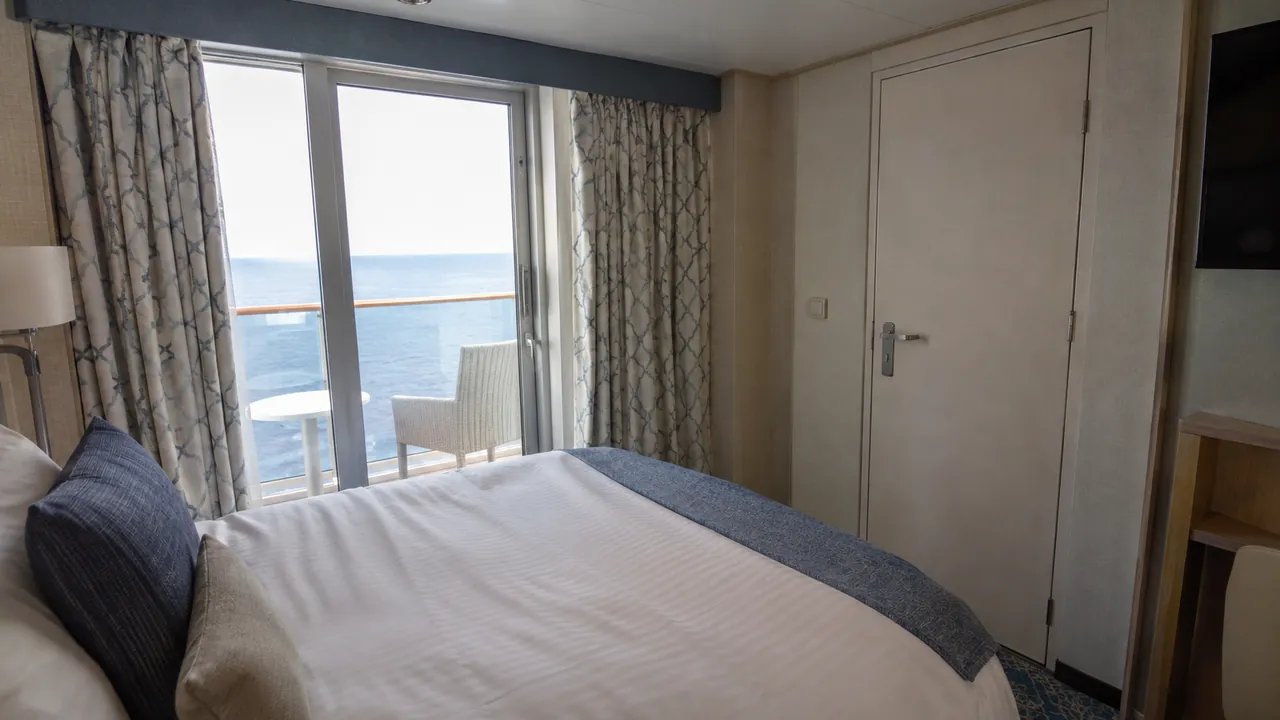
Short answer: book connecting cabins when your party fills both rooms and wants a private door between them. Skip a connecting cabin if the next room belongs to strangers: the door lets more sound through than a solid wall. Look for the connecting symbol on the line's deck plan, not only adjacent cabin numbers.
Connecting cabins (also called interconnecting or connecting staterooms) are two neighbouring rooms with an internal door. Each room keeps its own hallway door, bathroom and beds. When both bookings are yours, the steward can unlock the connecting door so the rooms work as one suite with an extra bathroom.
Who connecting cabins are for
- Families who need two bathrooms and a door they control. Royal Caribbean's rooms page lists connecting rooms among the ways larger families stay close without one huge suite. Carnival's stateroom overview describes connecting rooms as cabins with a common door between them. Norwegian's stateroom page has a dedicated Connecting Staterooms section for groups who want to stay close.
- Friends or multi-generational groups who want privacy at night but easy access by day.
- Anyone who needs a minor in a second room. Lines still require an adult on the booking for each stateroom; connecting doors do not change that rule. Check the line's current minor policy before you lock the booking.
Celebrity's Edge-series stateroom page states there are 178 possible connecting stateroom options on those ships, including combinations that join two Edge staterooms with Infinite Verandas, and suite pairs that sleep larger parties. Princess publishes interconnecting two-bedroom family suites on select ships (Ruby, Emerald, Crown and Caribbean Princess) that sleep up to eight and must be reserved through customer service rather than online; Star Princess fact sheet language also lists 100 connecting staterooms on that ship.
The noise trade-off
A connecting door is thinner than a cabin wall. If you book one connecting cabin and strangers book the other, you hear more of their TV, conversations and hallway-side door use than you would through a solid bulkhead. Our cabins to avoid guide flags connecting cabins for light sleepers who are not travelling with the people next door. If quiet sleep is the priority, pick a non-connecting cabin on a sandwiched cabin deck instead.
When both rooms are yours, the trade-off flips: the door is useful, and you control both sides. Keep the connecting door closed (and locked) when someone is napping, and ask the steward to unlock it after embarkation if it arrives locked.
How to spot them on a deck plan
- Open the line's official deck plan for your ship (linked from each of our ship pages).
- Find the legend symbol for connecting or interconnecting staterooms (often a double arrow or a marked shared wall).
- Confirm both cabin numbers show that symbol between them. Cabins that only sit next to each other are adjoining, not connecting.
- Check each room's occupancy on the plan or booking screen. Connecting does not merge occupancy limits: each cabin still has its own maximum.
What connecting cabins are not
- Not a guarantee of a quiet deck. A connecting pair under the pool or over a theatre has the same overhead or underfoot noise as any other cabin there. Use the ship page's deck noise map first.
- Not the same as a suite. Two connecting insides or balconies give two bathrooms and more floor space, but they do not automatically include suite lounges or other suite perks unless the line's category says so (Celebrity documents some Edge suite-plus-non-suite connecting pairs that share Retreat access; that is a line-specific rule, not a fleetwide promise).
- Not advice to book or spend. We do not publish prices or sailings. This page only explains who the layout suits and what the deck plan symbols mean.
Frequently asked questions
Who should book connecting cruise cabins?
Families and groups who will occupy both rooms and want a private door between them. Light sleepers next to another party should choose a non-connecting cabin.
Are connecting cabins noisier?
The connecting door passes more sound than a solid wall. That helps when both rooms are yours and hurts when strangers are on the other side.
How do I find connecting cabins on a deck plan?
Use the line's deck plan legend for the connecting symbol between two cabin numbers. Adjacent cabins without that symbol do not open into each other.
Do connecting cabins change occupancy rules?
No. Each stateroom keeps its own maximum occupancy, and minors still need an adult on the booking per the line's rules.
Sources
- Royal Caribbean: cruise rooms and suites (connecting rooms)
- Carnival: staterooms (connecting rooms)
- Norwegian Cruise Line: staterooms (Connecting Staterooms)
- Celebrity Cruises: staterooms (connecting options on Edge series)
- Princess Cruises: staterooms (interconnecting family suites)
- Princess Cruises: Star Princess fact sheet (100 connecting staterooms)
Retrieved 22 Nov 2026.